Watercolor White Lily Floral Clipart: Elevating Digital and Print Designs
In the expansive world of digital design resources, few elements convey purity, elegance, and tranquility quite like the white lily. For creators ranging from hobbyist scrapbookers to professional graphic designers, finding high-quality botanical assets can often be a challenge. The Watercolor White Lily Floral Clipart collection addresses this need by offering a curated suite of hand-painted illustrations that bridge the gap between traditional artistic expression and modern digital utility. This article explores the characteristics, applications, and practical considerations of utilizing such a specialized floral bundle in your creative workflow.
The Artistic Appeal of Hand-Painted Botanicals
Watercolor as a medium has long been associated with softness, fluidity, and organic beauty. Unlike vector graphics, which are defined by clean, mathematical lines, watercolor art retains the subtle imperfections and textural nuances of brushstrokes on paper. When applied to the subject of white lilies, this technique captures the delicate translucency of the petals and the gentle gradients of light and shadow.
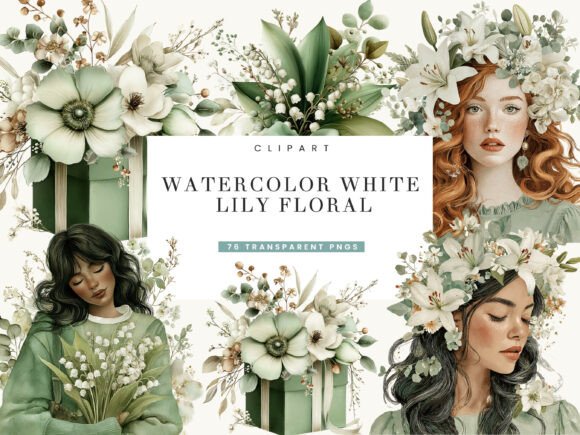
The Watercolor White Lily Floral Clipart is not merely a static image; it is a representation of artistic intent. Each element in a comprehensive bundle, such as the 76-piece collection referenced here, is designed to stand alone or combine with other elements to create complex compositions. The "hand-painted" aspect ensures that no two leaves or petals are exactly identical, providing a level of uniqueness that mass-produced stock photos often lack. This authenticity resonates with audiences who value craftsmanship and aesthetic depth in the materials they consume, whether in wedding invitations, journal covers, or branding materials.
Technical Specifications and Usability
While artistic merit is crucial, the practical utility of digital clipart depends heavily on its technical specifications. For any digital asset to be truly versatile, it must integrate seamlessly into various software environments. The primary format for this type of resource is the PNG (Portable Network Graphics) file. PNGs are preferred in design workflows because they support transparency. This means that when you place a watercolor lily onto a colored background, a textured paper scan, or a photograph, there is no unsightly white box surrounding the flower. The image blends naturally, preserving the integrity of the underlying layer.
Furthermore, resolution plays a pivotal role in determining where these images can be used. High-quality clipart bundles typically offer files at 300 DPI (Dots Per Inch). This standard is essential for print projects. While 72 DPI is sufficient for screen display, printing at a lower resolution can result in pixelation and blurry edges. With 300 DPI files, creators can confidently use these lilies for physical products such as greeting cards, stickers, and sublimation prints without compromising sharpness or clarity. The inclusion of high-resolution files ensures that the delicate details of the watercolor wash remain crisp, even when scaled up for larger formats like posters or banner designs.
Diverse Applications for Creators and Businesses
The versatility of Watercolor White Lily Floral Clipart allows it to serve a wide array of creative and commercial purposes. Understanding where these assets fit best can help users maximize their value. Below are several key sectors where these floral elements excel:
- Junk Journals and Scrapbooking: Enthusiasts of analog journaling often seek digital elements to print and incorporate into their physical books. The whimsical and soft nature of watercolor lilies complements the vintage, layered aesthetic typical of junk journals. Users can print these elements on specialty papers, cut them out, and adhere them to pages to create focal points or decorative borders.
- Wedding and Event Stationery: White lilies are symbolic of purity and devotion, making them a popular choice for wedding themes. Designers can use these cliparts to create elegant save-the-dates, invitation suites, menu cards, and place settings. The transparent backgrounds allow for easy overlaying onto textured cardstock simulations or marble backgrounds, creating a sophisticated look with minimal effort.
- Print-on-Demand Products: For entrepreneurs running online stores, this clipart bundle offers a ready-made design resource. The images can be applied to mugs, tote bags, phone cases, and pillows via sublimation printing. Because the designs are pre-isolated with transparent backgrounds, the workflow for creating mockups and final print files is streamlined, allowing for faster product launches.
- Digital Planning and Stickers: The rise of digital planning on tablets has created a demand for high-quality digital stickers. These watercolor lilies can be imported into planning apps to decorate weekly spreads, mark special occasions, or simply add aesthetic appeal to daily logs. Their high resolution ensures they look crisp on retina displays.
Evaluating Suitability for Your Project
Before integrating Watercolor White Lily Floral Clipart into a project, it is important to assess whether the style aligns with your brand or personal aesthetic. Watercolor is inherently soft and romantic. It works exceptionally well for brands or projects that aim to convey gentleness, nature, wellness, or femininity. However, it may not be the ideal choice for corporate, tech-focused, or high-contrast modern minimalist designs that require rigid geometric shapes and bold, flat colors.
Additionally, consider the color palette of your overall design. White lilies are neutral, but they often contain subtle hints of green, yellow, or cream in their centers and shadows. Ensure that these undertones harmonize with your chosen color scheme. If your project requires stark, pure white elements, you may need to adjust the brightness and contrast of the clipart in your editing software to match your specific needs.
Practical Considerations and Best Practices
To get the most out of a 76 Watercolor White Lily Floral Clipart Bundle, users should adopt a few best practices. First, always organize your files immediately after download. With a large number of assets, having a structured folder system saves time during the design process. Grouping elements by type—such as full blooms, buds, leaves, and stems—can streamline the selection process.
Second, respect the licensing terms. Most digital clipart bundles come with specific usage rights. While many allow for commercial use in end products (like selling printed invitations), they often prohibit the redistribution of the raw clipart files themselves. Always read the license agreement to ensure compliance, especially if you are using these assets for client work or commercial sales.
Finally, experiment with layering. One of the strengths of having a large bundle is the ability to create custom arrangements. By overlapping different lily elements, rotating them, and adjusting their opacity, you can create unique floral bouquets that do not exist in the original pack. This technique adds depth and complexity to your designs, making them appear more bespoke and less like standard stock imagery.
Conclusion
The Watercolor White Lily Floral Clipart represents more than just a collection of images; it is a tool for enhancing visual storytelling. Whether you are a DIY enthusiast looking to add a personal touch to your journal or a professional designer crafting elegant wedding suites, these assets provide a blend of artistic charm and technical reliability. By understanding the features, such as transparent PNGs and 300 DPI resolution, and applying them thoughtfully across various mediums, creators can elevate their projects with timeless floral beauty. As digital design continues to evolve, the demand for authentic, hand-crafted elements remains strong, making resources like this an invaluable addition to any creative toolkit.